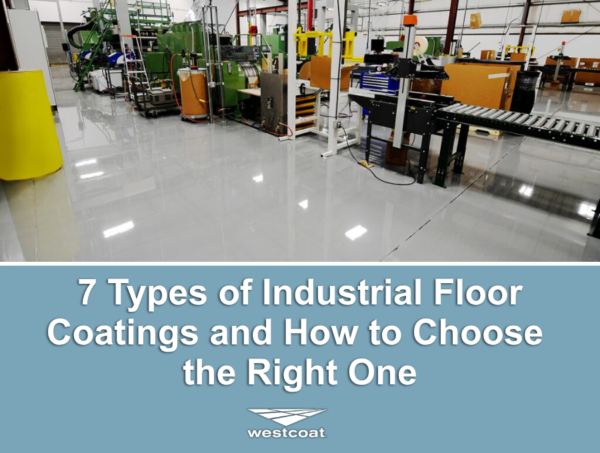

7 Types of Industrial Floor Coatings: How to Choose the Right One
by Michelle
- October 25th, 2024 /
- Education,Epoxy Coat
Updated November 2, 2026
Optimal industrial floor coatings ensure a high rate of return, supplement productivity and efficiency within the space, and protect the longevity of your investments. Yet, selecting which type of industrial floor coating suits your application can prove challenging if you don’t know what’s available. The consequences of installing an inferior floor coating can also plague your business and your bottom line.
The guide below introduces the advantages and disadvantages of seven distinct types of floor coatings designed for industrial use. Explore these options to determine which product type best suits your application. When you’re ready to move forward with your project, Westcoat delivers numerous high-quality flooring solutions for all industries to help our customers focus on what matters most.

The Importance of Low-Maintenance Industrial Floor Coatings
Low-maintenance industrial floor coatings benefit business owners by reducing the time, funds, and energy necessary for upkeep. Industrial floor coatings represent a significant business investment, but that shouldn’t come at the cost of sustainability. The best industrial floor coatings also minimize downtime to support higher productivity, comply with health and safety regulations, increase the longevity of the substrate beneath, and provide an aesthetically pleasing solution.
7 Industrial Floor Coatings for Your Project
Avoid trusting the fate of your business’ foundation to just any industrial floor coating. Partner with Westcoat and explore our industrial floor coating solutions to optimize the ground beneath you as you grow your business.
1. Epoxy Systems

Comprised of epoxy resin and a hardening agent, epoxy resin is a popular economical industrial floor coating option that scores high marks for durability, versatility, and cleanability. It can be easily applied to concrete, wood, or steel after thoroughly preparing the substrate. Better yet, you can purchase epoxy coatings in various finishes and colors to suit your intended design.
Westcoat offers multiple USDA-compliant epoxy coating systems that are as high-performing as they are aesthetically pleasing. Depending on the system and finish, Westcoat industrial floor coatings provide impact and chemical resistance, with slip-resistant textures available.
Our chemical-resistant Epoxy Slurry and Epoxy Mortar systems are designed for restaurants, kitchens, warehouses, manufacturing, and laboratories. Explore the Thin Film Decorative System for a medium-build epoxy floor coating. If you’re looking for a more textured floor coating, the Double Broadcast Dubro System and Tidalstone® Flooring System feature decorative aggregate to enhance the performance and feel of these industrial floor coating solutions.
2. Polyurethane Topcoats

Polyurethane industrial topcoats are a viable alternative topcoat for epoxy systems due to their anti-corrosive nature, flexibility, UV resistance, scuff and scratch resistance, and short curing time. Despite a slight price difference, polyurethane industrial floors are often easier to maintain than their epoxy counterparts. Westcoat’s SC-65 Water-Based (WB) Clear Polyurethane Sealer is a low-odor polyurethane topcoat option with an expedited return to service.
Westcoat’s EC-95G Gloss Polyurethane Topcoat incorporates chemical, abrasion, and UV resistance into its design. Ideal for outdoor and heavy-traffic areas, EC-95G can be sprayed, rolled, or brushed over most Westcoat epoxy floor coatings. This product is also Volatile Organic Compound (VOC) compliant.
3. Polyaspartic Topcoats and Coatings
A polyaspartic industrial floor coating resembles polyurethane coatings but is considered a hybrid material that’s ideal for maximum corrosion resistance. Formulated as a flooring system and topcoat, polyaspartic coatings take less time and labor to apply and benefit from low VOCs.
In the competitive polyaspartic industrial floor coating market, Westcoat’s EC-102 Polyaspartic Topcoat minimizes downtime while offering numerous benefits during its service life. EC-102 is chemical, tire stain (plasticizer migration) resistant, UV-resistant, and complies with USDA and FDA regulations. Offered in fast cure, standard cure, and slow cure options EC-102 offers maximum project flexibility including fast-tracking projects when a quick return to service is critical. Economical in price, it can easily be paired with many Westcoat epoxies and urethane cement systems to create a high-sheen finish.

4. Acrylic Sealers and Coatings
Acrylic industrial floor coatings are affordable, short-term solutions that add minimal thickness to the floor substrate. Solvent-based acrylic coatings are ideal for external use, while water-based variants are preferred for indoor applications. Although acrylic floor coatings can provide some UV protection and slip resistance, they tend to degrade quickly as use increases. Westcoat’s SC-42 water-based acrylic sealer, SC-70 VOC-compliant solvenated acrylic, and SC-71 high VOC solvenated acrylic are great choices for sealing interior and exterior concrete surfaces to provide protection and dust-proofing qualities.
Polyurethane industrial floor coatings surpass their acrylic counterparts for a minimal investment increase. Westcoat products such as the EC-95G Polyurethane Topcoat Grind and Seal System offer increased protection with the long-term benefit of increased durability. Polyurethane floor coatings also require less maintenance to keep commerce flowing efficiently.
5. Urethane Cement Systems

Blending urethane’s elasticity and cement’s strength results in a urethane cement coating that’s as robust as it is flexible. Urethane cement industrial floor coatings incorporate modified urethane, cement, water, and aggregates to form a high-performance, minimal-cost coating designed to withstand heavy traffic, thermal shock, chemical spills, and impacts. Many urethane cement coatings also lack odor and VOCs. Urethane cement systems provide seamless, durable surfaces that are easy to clean. Antimicrobial performance depends on the specific system or topcoat.
The Westcoat Temper-Crete® Self-Leveling (SL) System is a high-build, medium-duty, seamless industrial floor coating designed for use on interior concrete. This product is USDA and FDA-compliant, and installation requires minor downtime. We also offer the Temper-Crete SLB, SLC, and SLQ systems which elevate the texture and decorative aesthetic options, and the Tempercrete Rake Trowel System for high build, heavy-duty applications to suit your industrial floor coating needs.
6. MMA (Methyl Methacrylate) Coatings
Methyl methacrylate (MMA) industrial floor coatings are a type of acrylic resin less common than epoxy and polyurethane. The main selling point of these “one-day” lab-created polymers is the quick return to service they offer. However, such fast curing times require a swift and experienced installation expert and leave little room for error.
In addition, MMA floor coatings require expensive chemical formulations. Flooring experts must abide by personal safety protocols when mixing and installing to avoid injury. An MMA coating’s ability to penetrate into the substrate also varies, which can lead to premature peeling or the need for a complete replacement.
MMA industrial floor coatings come in a limited range of colors, which can fade when exposed to UV light. Repairing and maintaining MMA floors can also prove to be challenging and extensive. MMA coatings typically fail to provide sufficient sound-proofing qualities and can easily crack under heavy impacts.
7. Anti-Static (ESD) Coatings
Installing electrostatic discharge (ESD) industrial floor coatings can protect employees, heavy machinery, and high-dollar electronics from the static electricity that builds up due to the natural friction of our shoes against the floor. Although ESD footwear and wrist straps help discharge static into grounded workstations, enabling the floor coating to direct static through the floor offers additional application-specific benefits — conductive elements within the floor coating direct static to discharge harmlessly into the ground for a safer environment.
ESD industrial floor coatings are typically an application-specific solution that businesses seek out to comply with industry regulations. Manufacturers produce these distinct coatings to handle static discharge, not necessarily heavy impacts, machinery, or foot traffic. Installation can also cost more, given these industrial floor coatings must comply with strict requirements to ensure reliable performance.

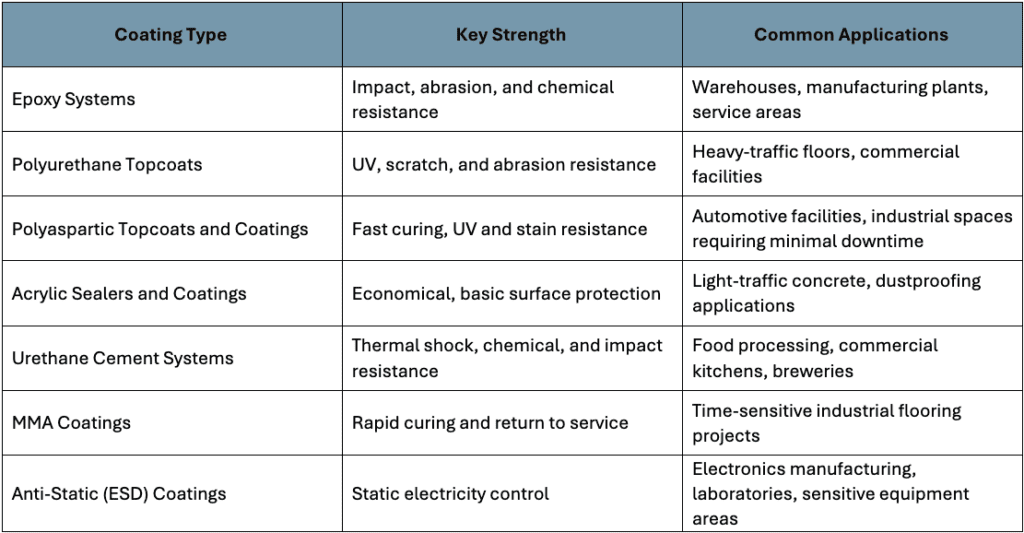
Industrial Floor Coatings Comparison
Each industrial floor coating offers different performance benefits. This comparison highlights the key strengths and common applications of all seven coating types to help narrow your options.
How to Choose the Right Industrial Floor Coating
The right industrial floor coating depends on how the space is used, its operating conditions, and long-term maintenance needs. Before selecting a commercial floor coating, consider these factors:
- Traffic and Heavy Loads: Facilities with forklifts, machinery, or frequent impacts may require high-build epoxy, epoxy mortar, or urethane cement systems.
- Chemical Exposure: Consider exposure to oils, fuels, cleaning agents, and industrial chemicals. Select a system with chemical resistance appropriate for the specific substances and exposure conditions.
- Heat and Thermal Shock: Food processing plants, commercial kitchens, and other areas exposed to hot water, steam, or temperature changes may benefit from urethane cement flooring.
- Moisture and Concrete Conditions: Evaluate the substrate for moisture vapor, cracks, contamination, and existing damage. These conditions can affect coating adhesion and system selection.
- Slip Resistance: Wet work areas, walkways, and production floors may require textured coatings or slip-resistant aggregates to improve traction.
- Installation and Downtime: Consider how quickly the facility needs to return to service. Polyaspartic and MMA systems offer rapid-curing options, while other systems may require longer cure times.
- Maintenance and Budget: Compare initial installation costs with expected service life, cleaning requirements, and future repairs.
- Specialized Requirements: Food production, laboratories, and electronics facilities may require specific hygienic finishes, chemical resistance, or electrostatic discharge (ESD) control.
For example, warehouse floor coating options often include industrial epoxy floor coatings for abrasion and impact resistance, while urethane cement may be better suited for facilities exposed to thermal shock, moisture, and aggressive chemicals.
What Industries Use Industrial Floor Coatings?
Industrial floor coatings are used across manufacturing, distribution, food production, and other commercial facilities where concrete floors require protection from daily wear and operating conditions.
- Manufacturing Facilities: Production floors must withstand heavy machinery, impacts, abrasion, and chemical exposure. High-build epoxy and urethane cement systems provide durable industrial flooring options.
- Warehouses and Distribution Centers: Forklift traffic, pallet movement, and concrete dust require durable, easy-to-maintain surfaces. Epoxy coatings are common warehouse flooring options. See Westcoat’s ABC Construction Specialties flooring project.
- Food Processing Facilities: Frequent cleaning, moisture, and temperature changes require seamless, chemical-resistant flooring. Urethane cement is well suited for demanding processing areas, while epoxy may be appropriate for lighter-duty spaces. See the Kelley’s Kookies facility project.
- Breweries and Wineries: Floors must resist liquids, chemicals, heavy equipment, and impacts while remaining easy to clean. Urethane cement provides a durable solution for production areas. See the St. Supéry Winery flooring project.
- Automotive and Service Facilities: Oil, fuel, tire traffic, and dropped tools create demanding floor conditions. Epoxy and polyurethane coating systems can provide abrasion and stain resistance. See Westcoat’s Auto Mechanic Epoxy Flooring project.
- Laboratories and Pharmaceutical Facilities: Seamless surfaces support frequent cleaning and chemical resistance. Epoxy and urethane cement systems offer flooring options based on the facility’s specific requirements.
- Stadiums and Large Venues: Heavy equipment, high foot traffic, and frequent event turnover require durable, low-maintenance floors. See the Allegiant Stadium flooring project.
FAQs About Industrial Floor Coatings
What is the best coating for an industrial floor?
The best industrial floor coating depends on traffic, chemical exposure, temperature, and maintenance requirements. Epoxy flooring is a common choice for warehouses and manufacturing facilities, while urethane cement is often preferred for areas exposed to heat, moisture, and thermal shock.
What is the most durable industrial floor coating?
High-build epoxy and urethane cement are among the most durable industrial flooring options. Epoxy mortar provides excellent impact and abrasion resistance, while urethane cement performs well in environments exposed to temperature changes, moisture, and chemicals.
What flooring is best for heavy machinery?
High-build epoxy mortar and properly specified urethane cement systems are strong options for industrial floors exposed to machinery, forklifts, and heavy equipment. The appropriate system depends on load conditions, impact resistance, and the structural capacity of the underlying concrete.
Are industrial epoxy floors chemical resistant?
Yes. Industrial epoxy floor coatings resist many oils, chemicals, and cleaning agents. However, chemical resistance varies by formulation, concentration, and exposure duration, so the system should be selected according to the facility’s specific requirements.
What flooring is best for food processing facilities?
Urethane cement is often preferred for food processing facilities because it resists thermal shock, moisture, chemicals, and heavy traffic. Seamless systems with properly detailed coves and drains also support cleaning and sanitation requirements.
How do you choose between epoxy and urethane cement?
Choose epoxy for industrial floors that primarily require abrasion resistance, impact protection, and easy maintenance. Choose urethane cement when the facility faces thermal shock, frequent washdowns, moisture, or demanding chemical exposure. Both systems offer durable flooring solutions when properly specified and installed.
Work With Westcoat to Protect Your Industrial Space
Since 1981, Westcoat has developed industrial flooring solutions for demanding commercial environments. We’ve developed innovative, durable floor coating solutions that integrate superior, high-performing materials and ensure optimal return to service post-installation.
Our network of professional contractors, applicators, and distributors delivers a seamless experience to convert your investment into one of your company’s best assets. We also support a robust national network of representatives, Qualified Contractor Applicators (QCAs), and distributors available to provide custom-tailored guidance and decision-making support.
Do you have questions about any of the industrial floor coating products or solutions listed here? Call us at 1-800-250-4519 to speak with a friendly and knowledgeable representative.
Contact us today to explore how our solutions can fulfill your industrial needs.