
Updated April 2026
Maintenance and Warranty Tips
by Michelle
- April 25th, 2026 /
- Education
A properly installed coating system is built to protect, perform, and enhance the surface it is applied to. But like any finished surface, long-term performance depends on the right product, proper installation, regular cleaning, and routine maintenance.
Whether the system is installed on a waterproof deck, pool deck, walkway, commercial floor, or decorative concrete surface, maintenance should not be treated as an afterthought. A simple care plan can help preserve the appearance of the surface, support long-term performance, and help owners stay aligned with warranty requirements.
Why Maintenance Matters for Coating Systems
Floor coating and waterproofing systems are exposed to real-world conditions every day. Foot traffic, UV exposure, moisture, cleaning chemicals, dirt, grease, abrasion, and normal wear can all affect the surface over time.
Routine maintenance helps property owners and facility teams identify small issues before they become larger repairs. It can also help extend the service life of the system and preserve the intended finish, texture, and appearance.
Maintenance is especially important for high-use areas such as:
- Commercial kitchens
- Parking garages
- Pool decks
- Balconies and breezeways
- Walkways and corridors
- Warehouses and industrial spaces
- Retail and hospitality environments
- Multi-family and HOA common areas
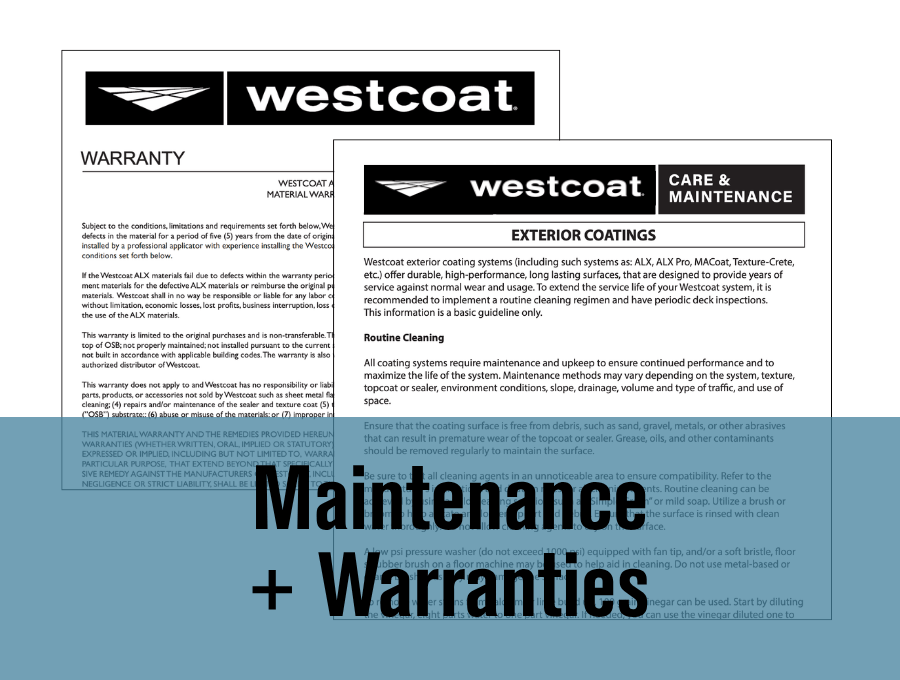
For exterior and interior coating systems, Westcoat care and maintenance guides reference the importance of periodic inspections and regular maintenance by qualified professionals.
General Cleaning Guidelines for Coated Surfaces
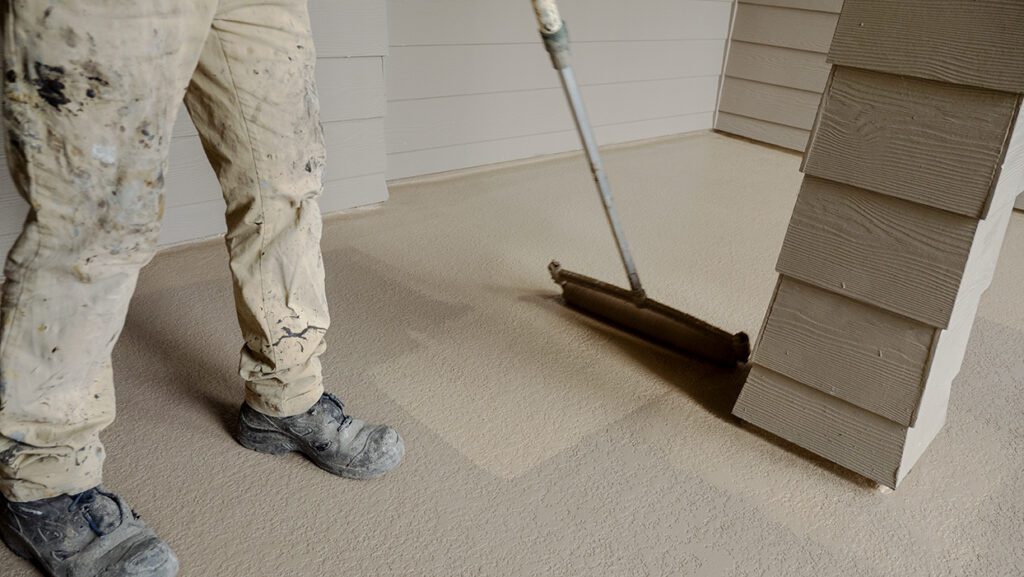
Most coating systems benefit from regular cleaning with simple tools and mild cleaning products. In many cases, routine sweeping and rinsing can help remove dirt, dust, and debris before they build up on the surface.
For general maintenance, use:
- A broom, dust mop, or soft-bristle brush
- Clean water for rinsing
- Neutral cleaning agents
- Mild degreasers when needed
- Low-pressure washing where appropriate
- Light scrubbing for areas with buildup
- Avoid harsh cleaning methods unless they have been reviewed by the installer or manufacturer. Aggressive chemicals, excessive pressure washing, abrasive pads, or incompatible cleaners may damage the finish or shorten the life of the coating.
After cleaning, rinse the surface thoroughly. Residue left behind from soaps, degreasers, or cleaning chemicals can affect appearance, traction, and long-term performance.
Interior Floor Maintenance
Interior coating systems may develop scratches, dullness, or visible wear depending on traffic levels, use conditions, and the original gloss level. This is normal for many hard surface flooring systems, especially in commercial and industrial environments.
For interior floors, maintenance may include:
- Regular sweeping or dust mopping
- Routine wet cleaning with compatible products
- Spot cleaning spills quickly
- Using walk-off mats at entries
- Protecting the surface from sharp objects or dragging equipment
- Periodic inspection of high-traffic areas
- Reapplication of compatible floor finish or protective topcoat when recommended
In spaces with heavier use, such as commercial kitchens, production areas, warehouses, and garage floors, the maintenance plan should be more specific. These environments may need scheduled inspections, targeted repairs, and planned recoat or reseal cycles.
Exterior Coating and Deck Maintenance
Exterior coating systems face additional exposure from sunlight, weather, moisture, drainage conditions, landscaping, and surrounding building details. For waterproof decks, balconies, walkways, and pool decks, routine care is especially important because surface performance is tied to both appearance and protection.
Exterior maintenance may include:
- Keeping drains, scuppers, and gutters clear
- Removing standing water where possible
- Cleaning dirt, leaves, and organic debris
- Checking for cracks, damage, or worn areas
- Inspecting transitions, edges, penetrations, and terminations
- Reviewing high-traffic paths for wear
- Scheduling professional inspections when needed
Exterior systems should be inspected periodically and maintained before minor damage becomes more significant. Westcoat’s exterior care guidance notes that exterior coating systems should be periodically inspected and regularly maintained by a Westcoat Qualified Contractor Applicator.
When a Reseal or Recoat May Be Needed
Over time, a coating system may need additional maintenance beyond routine cleaning. A reseal or recoat can help refresh the surface, restore protection, and extend the useful life of the system.
The timing depends on the system, use, exposure, traffic, maintenance history, and jobsite conditions. Instead of using a fixed timeline for every project, it is better to evaluate the surface condition and consult the original installer, a qualified contractor, or a Westcoat representative.
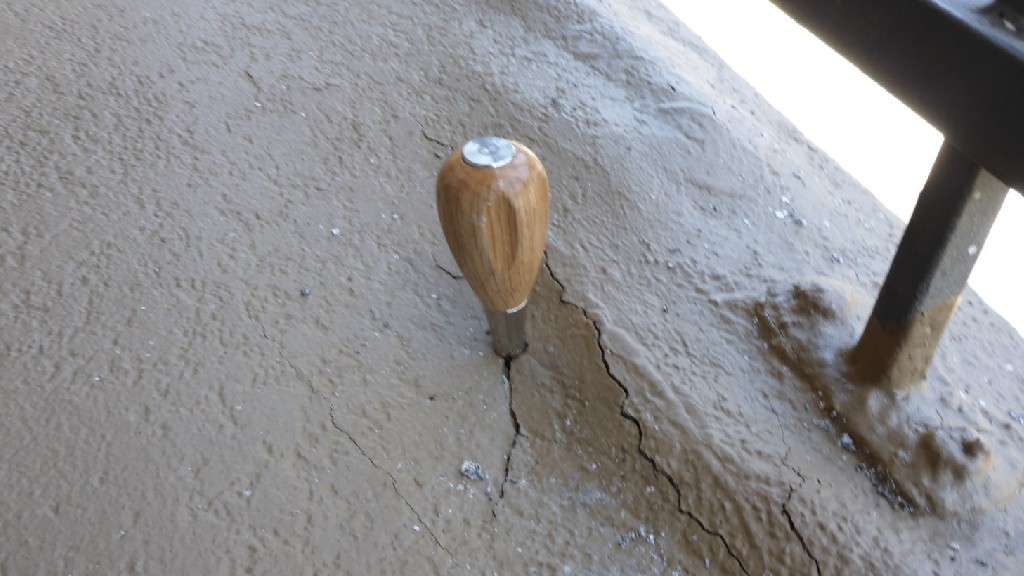
Signs that a surface may need review include:
- Visible wear in traffic lanes
- Loss of gloss or finish consistency
- Areas that are harder to clean
- Surface scratches or abrasion
- Fading or weathering
- Damage near drains, joints, edges, or penetrations
- Changes in texture or slip resistance
- Cracks or movement in the substrate
A planned maintenance cycle is usually more cost-effective than waiting until the surface is heavily worn or damaged.
Understanding Westcoat Warranties
Warranty coverage depends on the system, application, project conditions, installer qualifications, and whether the system was installed according to Westcoat specifications.
For general warranty information, property owners and customers should first contact the applicator who installed the system. Applicators can work with their local Westcoat representative for project-specific warranty questions and warranty request information.

Westcoat’s warranty resources page provides access to downloadable warranty documents, including general product warranty information and warranties related to QCA-installed systems. For project-specific and longer warranties, Westcoat notes that QCAs can work with their Westcoat representative on warranty options.
Why the Installer Matters
The installer plays a major role in the performance of any coating system. Proper surface preparation, product selection, application conditions, detailing, and adherence to specifications all affect the finished result.
For certain project-specific or extended warranty options, the applicator may need to be a Westcoat QCA, or Qualified Contractor Applicator. Westcoat’s QCA program includes benefits such as project-specific and longer warranties, training resources, and other contractor support tools.
Working with a qualified applicator can help support:
- Proper system selection
- Correct surface preparation
- Installation according to specifications
- Better project documentation
- Clearer maintenance guidance
- Warranty request support
- Long-term performance planning
What May Affect Warranty Coverage
Every warranty has specific terms, requirements, and exclusions. That is why it is important to review the applicable warranty document for the system and project.
Common factors that may affect coating performance or warranty eligibility include:
- Improper installation
- Lack of required maintenance
- Moisture or substrate-related issues
- Structural movement or cracking
- Normal wear and tear
- Damage from abuse, impact, or heavy use
- Use of incompatible materials
- Exposure to harsh chemicals
- Improper cleaning methods
- Failure to document inspections or repairs
This section should not replace the official warranty documents. Instead, it should help owners, managers, and applicators understand why proper installation, maintenance, and documentation matter.
Best Practices for Protecting Your Coating System
A coating system performs best when maintenance is planned from the start. Property managers, facility teams, building owners, and contractors should document the system installed, keep warranty paperwork accessible, and establish a cleaning and inspection schedule.
A simple maintenance file should include:
- Project name and location
- System installed
- Installer contact information
- Installation date
- Warranty documents
- Cleaning recommendations
- Inspection records
- Repair history
- Reseal or recoat history
- Photos of the surface over time
Keeping this information organized can make future maintenance, repairs, and warranty questions much easier to manage.
Questions About Maintenance or Warranty Information?
If you are a property owner or facility manager, start by contacting the applicator who installed your Westcoat system. They can review the project, inspect the surface, and help determine the next step.
If you are a contractor or applicator, contact your local Westcoat representative for system-specific maintenance guidance, warranty request information, or QCA program details.
Westcoat provides warranty resources, system specifications, and qualified contractor support to help coating systems perform as intended from installation through long-term maintenance.