

WHAT'S YOUR PROJECT?

FIND AN APPLICATOR

Kitchen
What Is the Best Epoxy for a High-Traffic Commercial Kitchen?
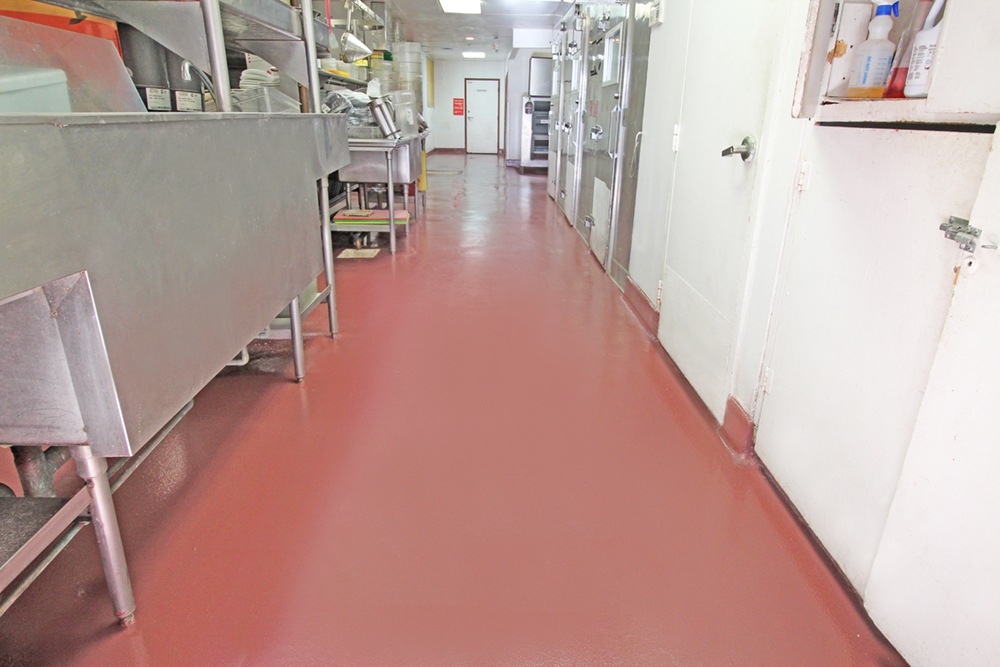
The best epoxy for a high-traffic commercial kitchen depends on the level of use, cleaning routine, exposure to heat, and overall traffic demands.
For many restaurant kitchens, a heavy-duty epoxy slurry or epoxy mortar system may be a strong fit. These systems provide a thicker, more durable surface than thin film coatings and can help protect against abrasion, impact, moisture, and daily wear.
Broadcast epoxy systems, such as quartz or double broadcast finishes, may be useful when added texture and slip resistance are priorities.
For the most demanding commercial kitchens, urethane cement may be the better long-term solution. While it is not a standard epoxy, it is often preferred where hot water washdowns, thermal shock, heavy equipment, and aggressive cleaning are regular concerns.
The best system depends on the space, but high-traffic kitchens typically need more than a basic coating.
-

Featured Projects
View All Projects
-
Food Production Flooring
Kitchen Warehouse -
New Cookie-ng Facility for Kelley’s Kookies
Kitchen -
Bakery Flooring
Kitchen -
Texture-Crete Interior at SDSU East Commons
Showroom Kitchen -
Office Kitchen Flooring
Showroom Office Kitchen -
Urethane Cement and Concrete Stain in Grocery Store
Retail Store Kitchen
Recommended Systems
-

Epoxy Slurry
Learn Morekey features
- Self-Leveling
- USDA Compliant
- 100% Solids
- Chemical Resistant
- High Strength
- High Build
-
Flex Epoxy System
Learn Morekey features
- USDA Compliant
- Low Viscosity
- 100% Solids
- Medium Build
- High Strength
-
Liquid Granite™ and Liquid Terrazzo™
Learn Morekey features
- Chemical Resistant
- Durable
- Seamless
- USDA Compliant
- Can Be Installed Solvent Free
-
Temper-Crete® Self-Leveling Urethane Cement
Learn Morekey features
- USDA / FDA / ADA Compliant
- Thermal Shock Resistant
- High Compressive Strength
- Chemical and Heat Resistant
- Industrial Flooring Option
-
Temper-Crete® Rake Trowel Urethane Cement
Learn Morekey features
- USDA / FDA / ADA Compliant
- Thermal Shock Resistant
- High Compressive Strength
- Chemical and Heat Resistant
- Industrial Flooring Option
-
Thin Film
Learn Morekey features
- 100% Solids and Water-Based Options Available
- USDA Compliant
- Slip-Resistant Textures Available
- Pigmented


