

WHAT'S YOUR PROJECT?

FIND AN APPLICATOR

Warehouse
Commercial Warehouse Flooring Coating Systems
Warehouses face forklift traffic, pallet impacts, abrasion, chemical and oil spills, concrete dust, moisture, and limited maintenance windows. The right commercial warehouse flooring system depends on these operating conditions.
Self-leveling epoxy is ideal for worn or uneven concrete; high-build epoxy and epoxy mortar provide added protection against heavy traffic and impacts; slip-resistant aggregates improve traction in wet areas; and urethane cement withstands thermal shock, heat, moisture, and chemicals.
Since 1981, Westcoat has developed industrial warehouse flooring solutions for demanding commercial environments. Our systems protect concrete, simplify cleaning, and support safer, more efficient operations.
Types of Epoxy Flooring Coating Services We Offer
Every warehouse epoxy floor coating should be selected according to traffic, substrate condition, chemical exposure, and maintenance requirements.
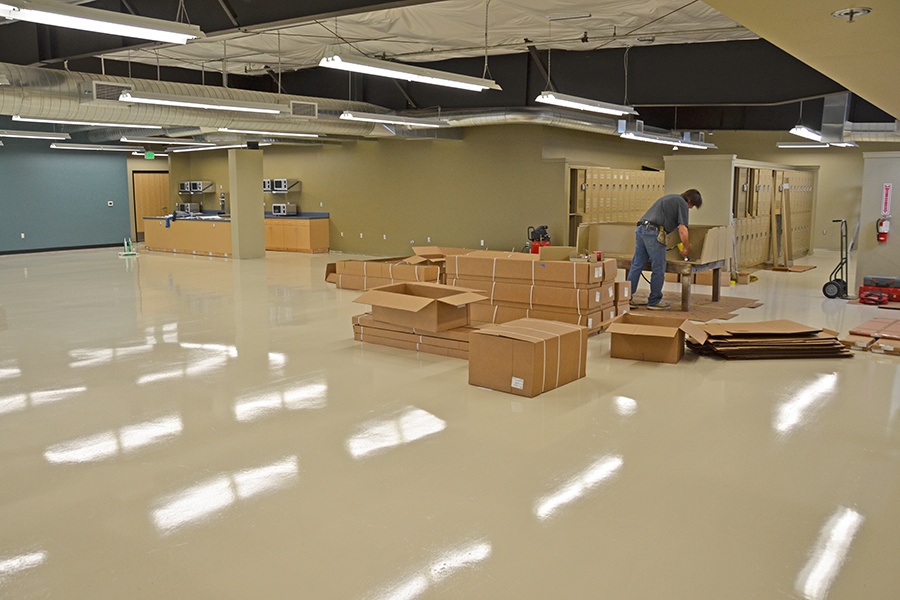
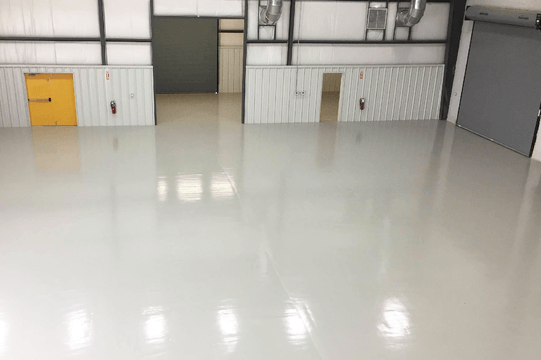
- Self-leveling epoxy: Westcoat Epoxy Slurry creates a seamless, high-build surface over properly prepared concrete. It is well suited for worn or uneven floors requiring strength and chemical resistance.
- High-build epoxy: Epoxy Slurry and Epoxy Mortar systems provide added protection in forklift lanes, loading areas, manufacturing spaces, and other high-wear locations.
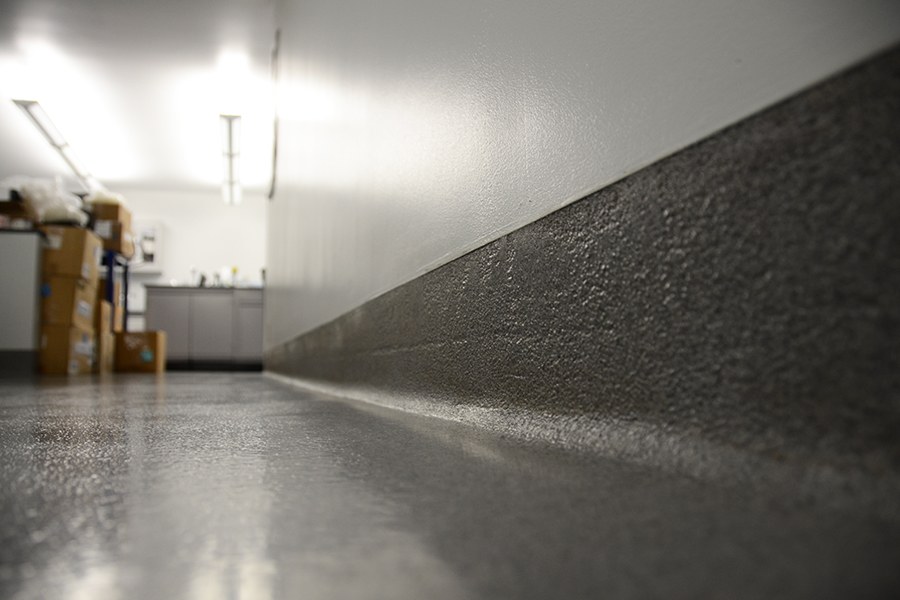
- Slip-resistant epoxy: Quartz, silica, and other aggregates can be incorporated to increase traction in areas exposed to water, oil, or frequent spills.
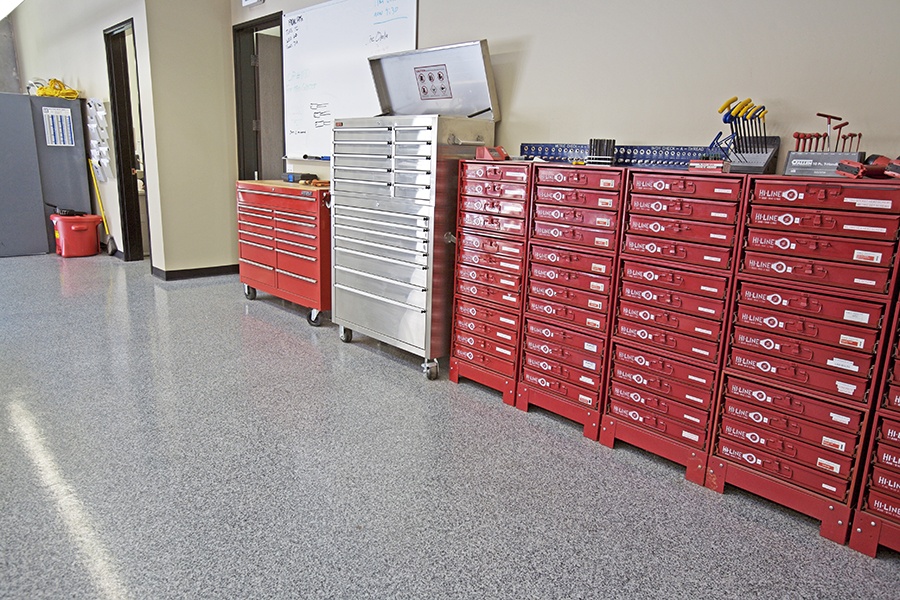
- Thin-film epoxy: A practical option for lighter-duty warehouse areas that need a pigmented, dust-resistant, easy-to-maintain surface.
- Dustproof concrete systems: Grind and Seal systems help control concrete dust and provide a chemical-resistant finish for serviceable floors with moderate traffic.
- Urethane cement: For thermal shock, heat, moisture, and aggressive chemical exposure, Temper-Crete® provides a durable alternative to conventional epoxy.
Features of Westcoat Industrial Warehouse Coating Systems
Westcoat offers industrial warehouse coating systems designed for different traffic levels, operational requirements, and concrete conditions. From epoxy systems to urethane cement, each solution is engineered for long-term durability in demanding warehouse environments.
- Seamless, easy-to-clean surfaces
- High-build options for heavy traffic and abrasion
- Resistance to chemicals, oils, stains, and impacts
- Slip-resistant textures for wet or high-risk areas
- Systems for worn, uneven, or dust-producing concrete
- Low-VOC, water-based, and 100%-solids options
- Colors and safety markings for improved visibility
- General and project-specific warranty options
Warranty eligibility depends on the selected system, installation, project conditions, and applicator qualifications. Certain project-specific or longer warranty options may require installation by a Westcoat Qualified Contractor Applicator.
FAQs
What is the best flooring for a warehouse?
High-build epoxy is often the best choice for general warehouse traffic, abrasion, and spills. Urethane cement may be better when the floor faces thermal shock, high moisture, heat, or aggressive chemicals.
Is epoxy flooring good for warehouses?
Yes. Epoxy creates a strong, seamless, chemical-resistant surface that is easy to clean. A properly selected industrial warehouse coating can also reduce concrete dust and improve traction and visibility.
What is the most durable warehouse floor coating?
For heavy impacts and abrasion, high-build epoxy slurry or epoxy mortar systems provide excellent durability. Urethane cement is generally preferred for environments involving thermal shock, heat, moisture, or severe chemical exposure.
How long does a warehouse epoxy floor last?
A properly specified, installed, and maintained epoxy floor can perform for many years. Its service life depends on traffic, impacts, chemicals, substrate preparation, cleaning, and timely topcoat renewal.
Can damaged warehouse concrete be coated?
Yes, provided cracks, spalls, contamination, and moisture issues are evaluated and addressed first. For a concrete floor warehouse project, proper repair and surface preparation are essential for coating adhesion and long-term performance.
How do you maintain warehouse flooring?
Sweep or dust-mop regularly, remove spills promptly, and clean with water, neutral cleaners, or mild degreasers. Inspect high-traffic areas periodically and repair damage or renew the topcoat before significant wear reaches the underlying system.

Recommended Systems
-

Grind and Seal System
Learn Morekey features
- Alternative to Polished Concrete
- Low VOC - May Contribute to LEED Credits
- Water-Based & Solvent Options
- USDA & FDA Compliant
- Chemical Resistant Finish
-
Epoxy Mortar Quartz
Learn Morekey features
- Broadcast Silica or Quartz Finish
- Slip Resistant textured design
- Typical DFT: 125 mils
-
Epoxy Slurry
Learn Morekey features
- Self-Leveling
- USDA Compliant
- 100% Solids
- Chemical Resistant
- High Strength
- High Build
-
Flex Epoxy System
Learn Morekey features
- USDA Compliant
- Low Viscosity
- 100% Solids
- Medium Build
- High Strength
-
Temper-Crete® Self-Leveling Urethane Cement
Learn Morekey features
- USDA / FDA / ADA Compliant
- Thermal Shock Resistant
- High Compressive Strength
- Chemical and Heat Resistant
- Industrial Flooring Option
-
Temper-Crete® Rake Trowel Urethane Cement
Learn Morekey features
- USDA / FDA / ADA Compliant
- Thermal Shock Resistant
- High Compressive Strength
- Chemical and Heat Resistant
- Industrial Flooring Option
-
Thin Film
Learn Morekey features
- 100% Solids and Water-Based Options Available
- USDA Compliant
- Slip-Resistant Textures Available
- Pigmented


