Solving Waterproofing Woes: Key Questions from Property Managers
by Michelle
- September 15th, 2022 /
- Education
We’ve gathered answers to common waterproofing questions property managers like you ask.
As a property manager, you are responsible for protecting the property, reducing tenant disruption, and helping ownership make smart maintenance decisions. Waterproofing balconies, patios, walkways, and outdoor common areas can feel like a major project, but the right planning can make the process more manageable.
Below are common waterproofing questions property managers ask when evaluating a repair, maintenance, or replacement project.
Question: How disruptive will this be for my tenants?
Answer: Most waterproofing projects can be planned in phases to help reduce disruption for residents. In many cases, work is completed from the exterior, especially on balconies, patios, decks, and walkways. Interior access may not be needed unless the project involves entryways, doors, transitions, or areas that require coordination from inside the unit.
For occupied properties, the biggest disruption is usually temporary access restrictions. Tenants may need to keep furniture, plants, doormats, and personal items off the surface before and during the project. Depending on the area being coated, residents may also need to avoid the space while the system cures.
A qualified applicator can help outline the expected schedule, access limitations, and cure times before the project begins. Clear tenant communication, advance notice, and phased work areas can help keep the project organized and reduce day-to-day frustration.
Q: Will tenants be able to use their outdoor space as usual after waterproofing?
A: Yes, once the surface has cured and is approved for use, tenants can typically return to normal use of their balcony, patio, or deck. However, a waterproofed surface still benefits from basic care.
To help protect the coating, tenants should use rubber pads or glides under furniture legs, avoid dragging heavy items across the surface, and keep potted plants elevated on stands or saucers that allow airflow. Breathable mats are preferred because rubber-backed or non-breathable mats can trap moisture against the surface.
It is also helpful to remind tenants that balconies and decks are not storage areas. Heavy planters, sharp furniture feet, standing water, and long-term debris buildup can shorten the life of the coating. Simple resident guidelines can help protect the property’s waterproofing investment.
Q: What’s the maintenance routine like?
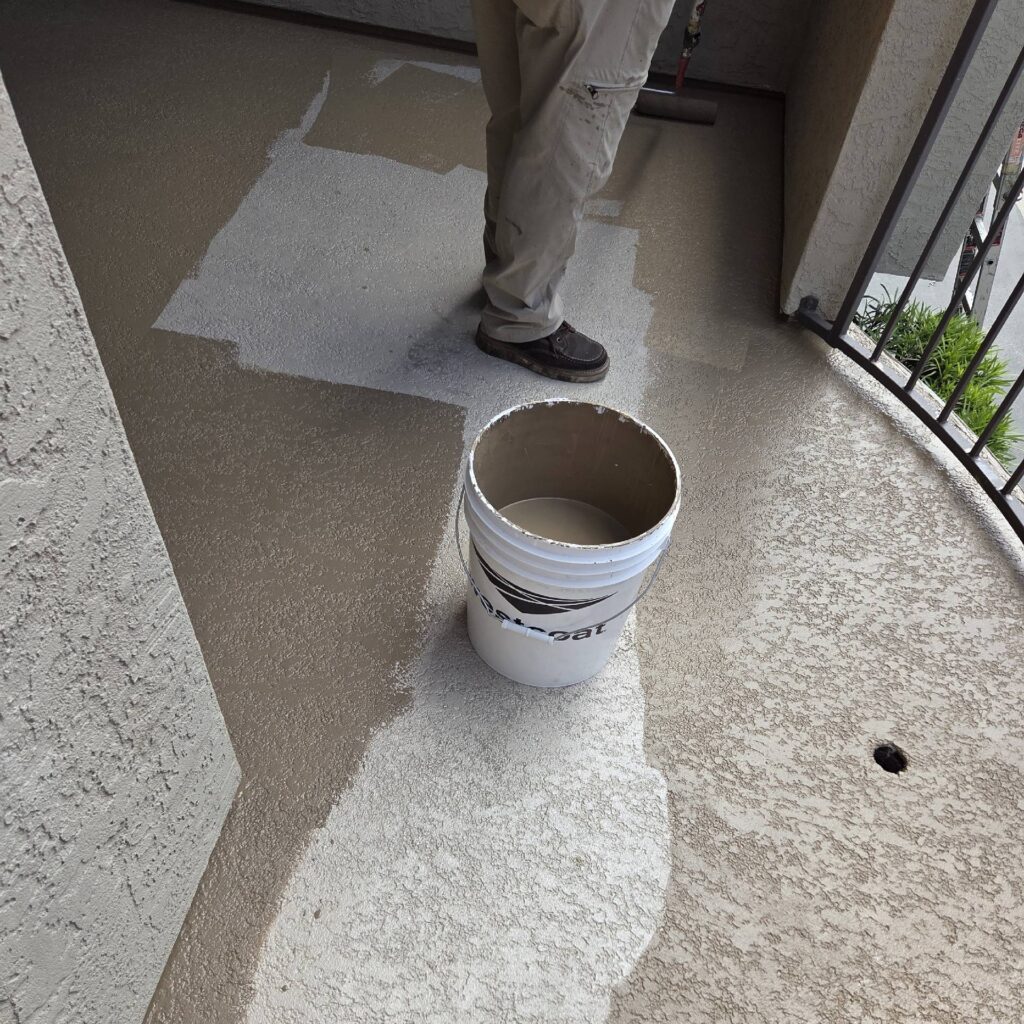
A: Waterproofed surfaces are generally low maintenance, but they are not no maintenance. Routine cleaning and inspection help preserve the coating and catch small issues before they become larger repairs.
Property teams should keep surfaces free of dirt, leaves, standing water, and debris. For cleaning, use a neutral pH cleaner or a diluted TSP solution as recommended by the manufacturer or applicator. Avoid harsh chemicals, abrasive tools, or pressure washing methods that could damage the coating.
It is also smart to inspect balconies, decks, walkways, and transitions regularly. Look for cracks, worn topcoat, loose sealant, peeling, soft spots, drainage concerns, or areas where water is ponding. If issues are found early, they may be easier to address with maintenance rather than a larger repair.
Many waterproofing systems also require periodic resealing or maintenance coats. A typical maintenance cycle may fall around every 3–5 years, depending on traffic, exposure, condition, and the system installed. Your Westcoat representative or qualified applicator can help determine the right maintenance plan for your property.
Q: How long will the waterproofing last? What are my warranty options?
A: The life of a waterproofing system depends on several factors, including the condition of the existing substrate, quality of installation, exposure to weather, foot traffic, drainage, and ongoing maintenance. A properly installed and maintained waterproofing system can provide years of protection, but regular inspections and maintenance are key to preserving performance.
Warranty options may vary by system, project conditions, applicator qualifications, and maintenance requirements. In general, warranty discussions should happen early in the planning process so ownership understands what is covered, what maintenance is required, and what documentation may be needed.
For property managers, the goal is not just to install a coating. The goal is to create a long-term protection plan for balconies, decks, walkways, and other exterior elevated surfaces. Westcoat can help connect you with qualified professionals who understand multi-family projects, tenant coordination, and waterproofing maintenance planning.
Q: How do I know when waterproofing should be repaired or replaced?
A: Warning signs can include cracks, peeling or bubbling coatings, soft spots, worn topcoat, loose sealant, staining, standing water, or tenant reports of leaks. These issues do not always mean the entire system needs to be replaced, but they should be evaluated before they become larger problems.
In some cases, a maintenance coat or targeted repair may be enough to extend the life of the existing waterproofing system. In other cases, especially when there is damage below the surface or ongoing water intrusion, a more complete replacement may be needed.
The best next step is to have the area reviewed by a qualified professional who can assess the surface condition, drainage, transitions, and overall system performance. Early evaluation helps property teams plan budgets, prioritize repairs, and reduce the risk of emergency work.
Q: Can waterproofing work be phased across multiple buildings or units?
A: Yes. Many multi-family waterproofing projects can be phased by building, deck stack, walkway, unit group, or priority area. This can help property managers reduce tenant disruption, manage budgets, and keep parts of the property accessible while work is underway.
Phasing is especially helpful for larger communities where completing all balconies, decks, or walkways at once may not be practical. A phased approach can also help property teams address the most urgent areas first, such as surfaces with leaks, visible coating failure, drainage concerns, or inspection-related repair needs.
Before work begins, your contractor or applicator should help outline the project sequence, access restrictions, cure times, and communication needs for residents. Clear planning makes it easier to coordinate notices, move personal items, and keep the project moving with fewer surprises.
More Questions?
Click to learn more about how we can protect your property’s decks and balconies.